
The 3A Learning® Process: Empowering High Impact Learning
Learning is change—change is learning. Today’s competitive advantage goes to those who can learn and adapt faster. The Life Cycle Institute’s 3A Learning process integrates learning, leadership and organizational change management competencies to produce documented, sustainable results.
The 3A Learning Process Facilitates Improved Business Results, Delivering a Measurable ROI for your Learning Investment.
Effective training occurs when it is fully applied and when desired results are achieved. When attending a class, retention and application of the new knowledge and skills will vary from 10 to 30% based on the type of class and content. Two factors heavily influence the extent to which the training is applied – retention and management support. When retention strategies and management support are included in the learning initiative, the application of new knowledge and skills will be much higher, often 90% or better. At the Life Cycle Institute, we call this High Impact Learning and the 3A Learning process enables these results by encouraging leadership involvement and applying retention strategies that ensure learning is not only an event, but is a true process that changes behavior and performance.
Align, Assimilate & Apply
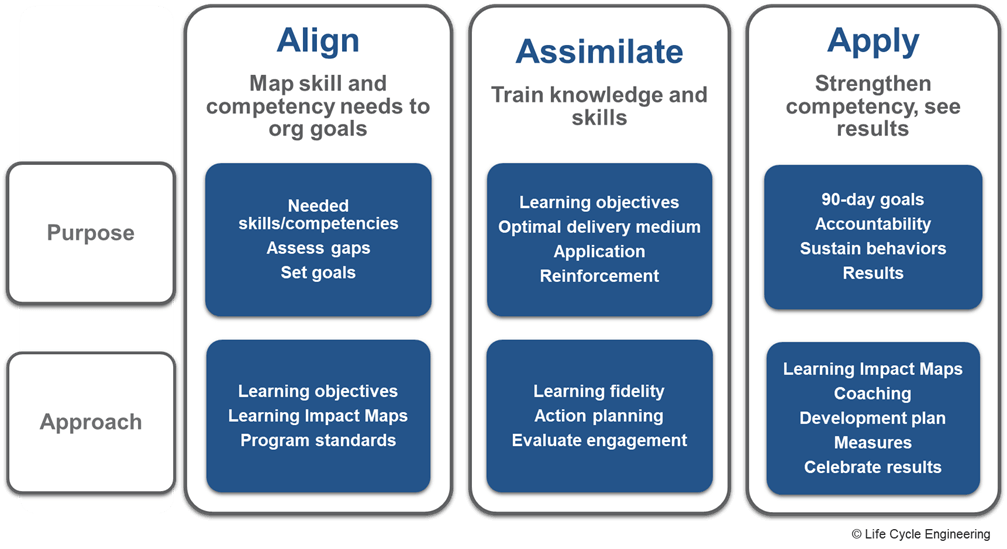
1. Alignment Phase
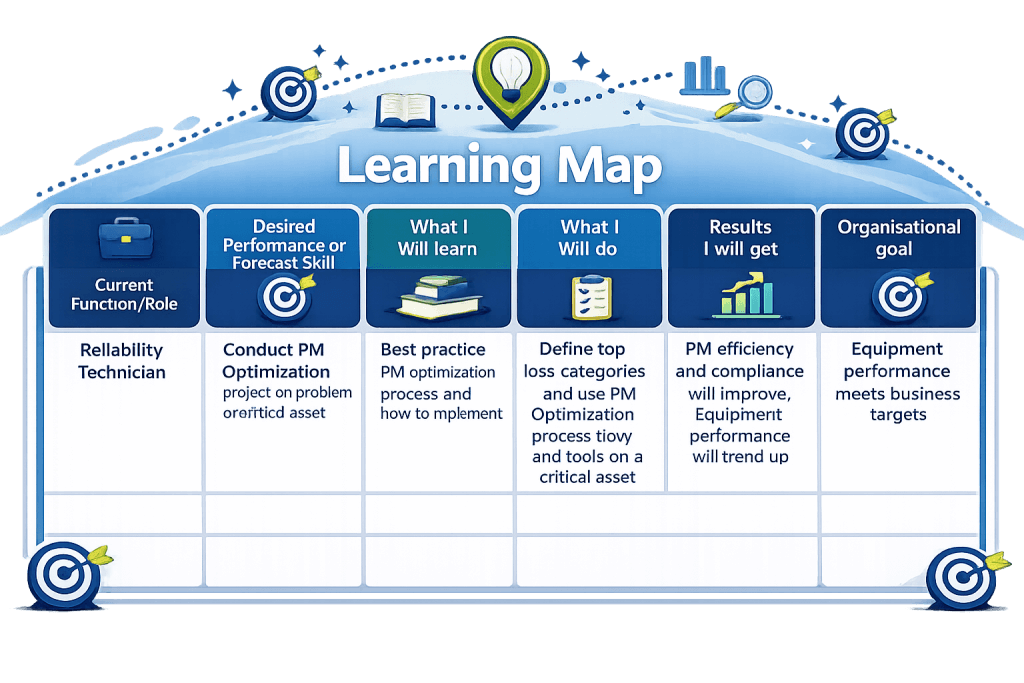
Before participating in a learning event, participants should have a thorough understanding of what they are expected to learn, how their behavior is expected to change, the results they are expected to achieve, and how these results contribute to the overall goals of the organization. To help meet these expectations, the use of learning objectives and Learning Impact Maps are crucial.
Well-developed learning objectives are the foundation of a successful learning intervention. These objectives should be measureable and define the action a participant will be able to take post-training.
A Learning Impact Map is a simple tool used to identify if the training can achieve the desired results, prepare participants to learn and change behavior based on the training, and link the desired behavior with organizational performance and business goals.
2. Assimilation Phase
During the learning event, the focus is on integrating the learning that resonates best with the participant. A successful learning event engages participants to apply what they already know while building relevant skills they can focus on and practice during class. It should be participant-centered, grounded in adult learning principles, led by skilled facilitators, and supported by a clear learning impact map.
Effective learning events recognize that people learn differently. They bring a wide range of knowledge, life experiences, interests and competencies to the experience. The following four principles of learning should be incorporated into any active learning environment:
Experience: engaging and reinforcing or re-engineering the prior experience and knowledge the learners bring in to the class.
Active: actively involving with the new knowledge and skills during the training so they are more likely to apply the new learning on the job
Relevant: content must be relevant to what the learner does in real life. If they need the skill or knowledge in real life, they’re more likely to use it
Self-direction: maintaining autonomy and encouraging initiative of the learners, sharing ideas, ownership and authority for making decisions during the learning experience
3. Application Phase
Applying what one has learned is where 80-90% of learning takes place. The Application phase involves using the skills and knowledge within the work environment. This phase is what makes the learning “stick,” causing a behavior change that produces desired results. During this phase, the Learning Impact Maps are used to reflect on the original goals and note any new-found knowledge, and a subject matter expert coach is available to support and expand the depth of the application.
Follow-through is an important step in the learning process as it encourages participants to take action, solicit feedback, and continue collaborative learning for up to three months after the learning event.
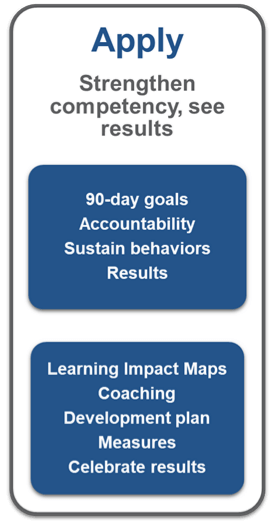
Follow-through
Follow Through extends learning beyond the classroom by encouraging participants to take action, solicit feedback, and continue collaborative learning for up to 3 months post-program. The Follow Through process of action / reflection is repeated – typically five times over a 10 week period – to ensure that participants:
- Keep their goals at the top of their mind
- Plan and track progress
- Learn from others
- Receive coaching and mentoring
- Involve their managers
- Document results
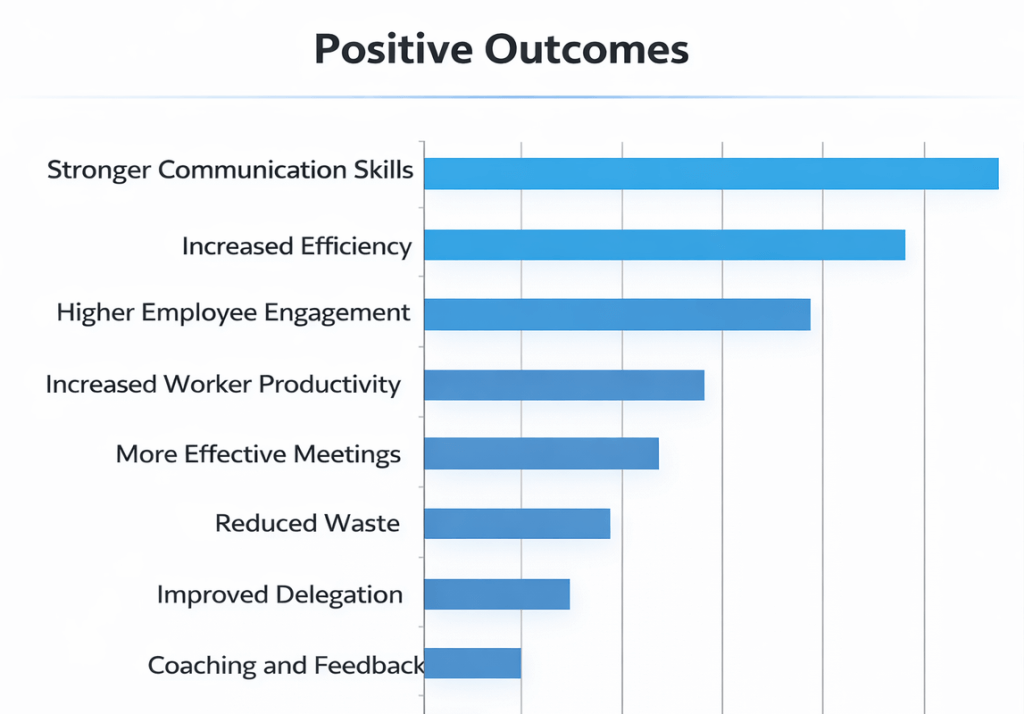
During the Follow Through process, the Facilitator/Coach will return to the site to ensure that skills learned during class are being practiced and understood by all participants. Sustainable improvements come from focused training, application and continual refinement. Coaching allows for one-on-one as well as group opportunities to build on best practices and systems. During the entire Follow Through/Coaching process, the Facilitator/Coach will be actively engaged with participants as an online coach as well, providing feedback, encouragement and recommendations to assist them in achieving the goals they set for themselves. When the program is complete, participants will have both learned and practiced the appropriate tools.
Results and Continuous Improvement
- Participants applied what they learned
- Results are tracked with immediate feedback
- On the job results reported by participants
- On the job improvements observed by managers
- Value reported by participants
- Recommended path forward